
Early Symptoms of Pancreatic Cancer: What to Watch Out For
The early symptoms of pancreatic cancer are often subtle and can include unexplained weight loss, mild abdominal or back pain, jaundice (yellowing of the skin and eyes), changes in stool color, and the sudden onset of sugar disease (diabetes). Because these signs can be vague and easily attributed to other, less serious conditions, pancreatic cancer is frequently diagnosed at a more advanced stage. Recognizing these potential warning signs is a critical first step toward seeking a timely medical evaluation.
If you are experiencing any of these persistent or concerning symptoms, it is important to get an expert medical opinion. A thorough evaluation can determine the cause and the appropriate next steps. The surgical team at our clinic, led by Prof. Dr. Oğuzhan Karatepe, has extensive experience in diagnosing and treating conditions of the pancreas. We are here to provide a professional assessment and discuss potential treatment pathways, including advanced surgical options.
Chat with us on WhatsApp (Free):
Why Are the Early Symptoms of Pancreatic Cancer So Hard to Detect?
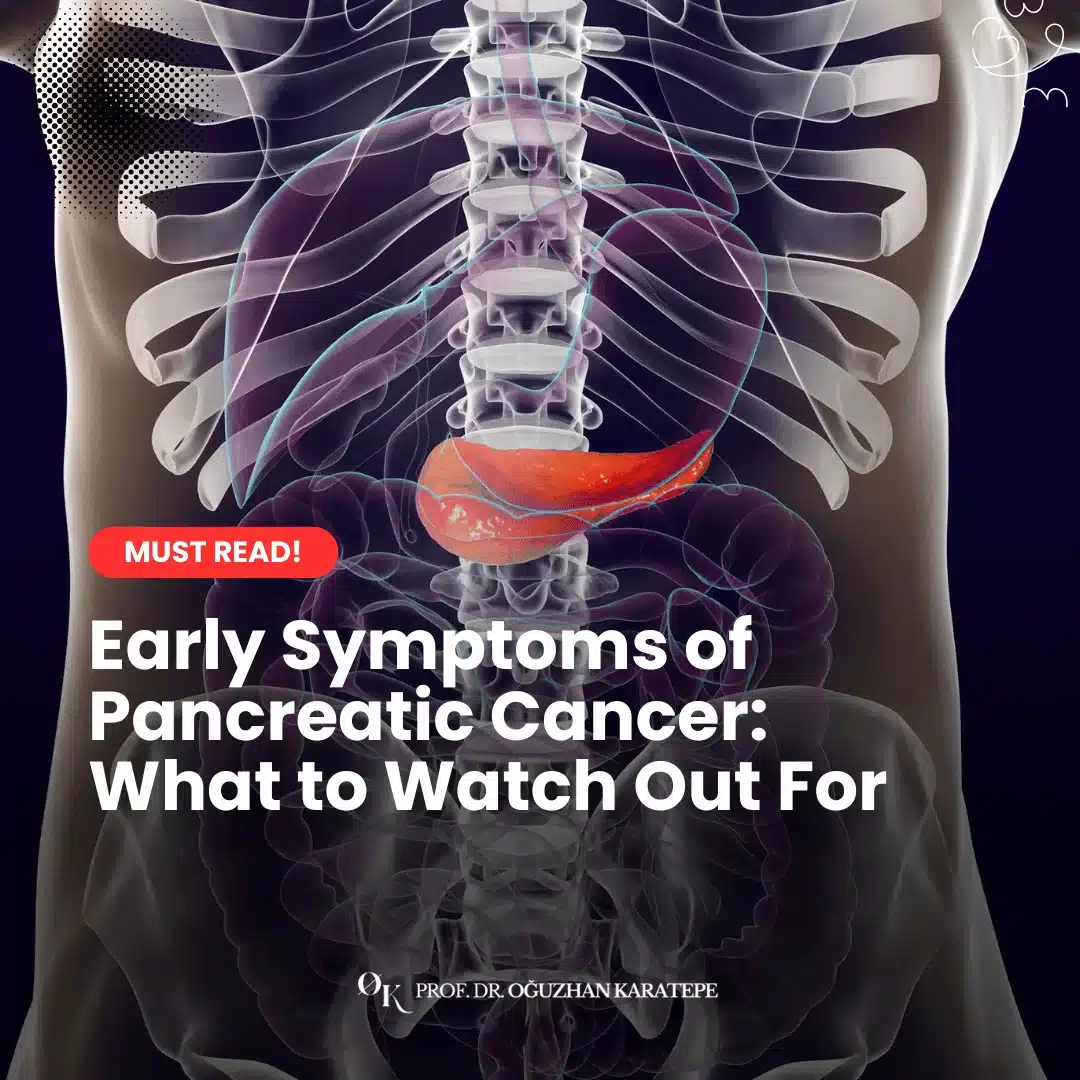
One of the biggest challenges with pancreatic cancer is its “silent” nature in the early stages. The pancreas is an organ located deep inside your abdomen, behind your stomach. Because of its hidden location, a small tumor growing within the pancreas doesn’t typically push on other organs or nerves to cause pain or other obvious symptoms right away. The initial signs are often non-specific, meaning they could be caused by many different health issues. For example, occasional back pain or feeling bloated might be dismissed as a normal part of aging or a minor digestive issue, when it could be an early clue.
This lack of clear, early warning signs is the primary reason why individuals may not seek medical attention until the cancer has grown larger and started to affect nearby structures, like the bile duct or small intestine, leading to more pronounced symptoms like jaundice. Understanding this challenge highlights the importance of paying close attention to any new, persistent, or unusual changes in your body.
Chat with us on WhatsApp (Free):
A Detailed Look at the Most Common Early Symptoms
While the early symptoms of pancreatic cancer can be subtle, they often fall into several key categories. Being aware of these specific signs, especially if you have more than one, can help you and your doctor decide if further investigation is needed.
Jaundice: Yellowing of the Skin and Eyes
Jaundice is one of the most specific and common signs of pancreatic cancer, particularly for tumors located in the head of the pancreas. It occurs when a tumor blocks the bile duct. The bile duct is a small tube that carries bile (a fluid that helps digest fat) from the liver, past the pancreas, and into the small intestine. When this duct is blocked, a substance in the bile called bilirubin builds up in the blood. This buildup causes the skin and the whites of the eyes to turn yellow. Other signs related to jaundice include:
- Dark Urine: The excess bilirubin in the blood is filtered out by the kidneys, which can make your urine brown or tea-colored.
- Pale, Greasy Stools: If bile isn’t reaching the intestines, stools may lose their brown color and appear pale or clay-colored. They may also be greasy and float due to undigested fat.
- Itchy Skin: The buildup of bile salts in the skin can cause widespread and intense itching.
While other conditions like gallstones or hepatitis can also cause jaundice, it should never be ignored and always requires immediate medical evaluation.
Abdominal and/or Back Pain
Pain is another frequent symptom. It’s often described as a dull, nagging ache in the upper abdomen that can radiate through to the back. This pain occurs when a growing tumor begins to press on surrounding organs or nerves. The pain may come and go at first but can become more constant over time. It might feel worse after eating or when lying down. Because back pain is so common, it’s often overlooked or blamed on muscle strain or arthritis. However, if you have persistent upper abdominal or mid-back pain that isn’t explained by an injury, it’s a symptom worth discussing with your doctor.
Unexplained Weight Loss and Loss of Appetite
Losing a significant amount of weight without changing your diet or exercise routine is a major red flag for many types of cancer, including pancreatic cancer. This can happen for a few reasons:
- Loss of Appetite: The cancer can cause a feeling of fullness (early satiety) or a general loss of interest in food.
- Poor Digestion: If the cancer is affecting the pancreas’s ability to produce digestive enzymes, your body may not be able to properly absorb nutrients from food, leading to weight loss even with normal eating.
- Cancer Cachexia: The cancer itself can alter the body’s metabolism, causing it to burn more calories than usual and break down muscle mass.
If you lose more than 5% of your body weight over a period of 6 to 12 months without trying, it is considered medically significant and warrants a doctor’s visit.
Digestive Problems
Because the pancreas is essential for digestion, a tumor can interfere with this process in several ways. You might experience symptoms like nausea, vomiting, indigestion, or a general feeling of being unwell. If the tumor is pressing on the stomach, it can make it difficult for food to pass through, leading to a feeling of fullness, bloating, and vomiting after meals. Changes in bowel habits, particularly the pale and greasy stools mentioned with jaundice, are also a key sign of poor fat digestion linked to pancreatic issues.
New Onset of Sugar Disease (Diabetes)
The pancreas produces insulin, the hormone that controls your blood sugar. Pancreatic cancer can damage the insulin-producing cells, leading to high blood sugar levels and the development of sugar disease. The sudden onset of Type 2 sugar disease in a person over the age of 50 who is otherwise healthy and not overweight can be an early warning sign of an underlying problem with the pancreas. If you have already been diagnosed with sugar disease, a sudden, unexplained difficulty in controlling your blood sugar levels could also be a symptom.
Chat with us on WhatsApp (Free):
Less Common Early Signs of Pancreatic Cancer
Beyond the more common symptoms, there are a few other signs that can appear in some individuals. These are less frequent but are still important to be aware of.
- Fatigue: Feeling extremely tired and weak, even after getting enough rest, is a common symptom of many cancers.
- Blood Clots: Pancreatic cancer can make the blood more likely to clot. Sometimes, the very first sign of the disease is a blood clot in a large vein, typically in the leg. This is called a deep vein thrombosis (DVT) and causes pain, swelling, and redness in the affected leg. A piece of the clot can also break off and travel to the lungs (a pulmonary embolism), which is a serious medical emergency.
- Nausea and Vomiting: While this can be part of general digestive upset, persistent nausea and vomiting can occur if the tumor is pressing on the end of the stomach, causing a blockage.
When to See a Doctor
It is essential to consult a doctor if you are experiencing any of the symptoms mentioned above, especially if they are persistent, severe, or you have more than one at the same time. While these symptoms can be caused by many other conditions, it’s always best to get a professional diagnosis. Don’t wait for the symptoms to become unbearable. Early detection is directly linked to having more treatment options available.
Your doctor will likely start by taking a detailed medical history and performing a physical exam. Based on your symptoms, they may order imaging tests like a CT scan or an MRI, blood tests, or refer you to a specialist for further evaluation.
Why Choose Prof. Dr. Oğuzhan Karatepe for Pancreatic Cancer Treatment?
A diagnosis involving the pancreas requires a medical team with exceptional skill and deep experience. Prof. Dr. Oğuzhan Karatepe is a distinguished general surgeon with more than 25 years of specialized practice in complex cancer surgeries. He has successfully performed over 3,000 major operations and is a respected author of hundreds of academic articles in both national and international publications. As one of Turkey’s leading surgeons for pancreatic, liver, and gastrointestinal cancers, Prof. Dr. Karatepe provides a high level of expertise in sophisticated surgical procedures like the Whipple operation. Our team is dedicated to offering professional, patient-focused care from diagnosis through treatment and recovery.
How to choose the best pancreatic cancer doctor?
Selecting the right surgeon is a crucial step. It’s important to look for a doctor who specializes in pancreatic surgery (an HPB or hepato-pancreato-biliary surgeon) and works at a center that performs a high volume of these complex procedures. Experience matters greatly, as it is often linked to better patient outcomes. A good doctor will also work as part of a multidisciplinary team (including oncologists and radiologists) and will communicate clearly and compassionately with you and your family.
Chat with us on WhatsApp (Free):
Which doctor treats the pancreas?
Treating pancreatic cancer is a collaborative effort. A General Surgeon or a specialized HPB Surgeon like Prof. Dr. Karatepe is responsible for performing surgery to remove the tumor. A Medical Oncologist manages treatments like chemotherapy, while a Radiation Oncologist administers radiation therapy. Your care is managed by this entire team working together.
Frequently Asked Questions (FAQ)
What is the very first sign of pancreatic cancer?
There is no single “first sign” for everyone. For many, jaundice (yellow skin/eyes) is the first noticeable and specific symptom. For others, it might be a vague, persistent pain in the abdomen or back, or unexplained weight loss.
Can you feel a pancreatic tumor by pressing on your stomach?
No, it is highly unlikely. The pancreas is located very deep in the abdomen, behind the stomach and other organs. A tumor would have to be extremely large to be felt from the outside, by which point it would likely be causing other severe symptoms.
What do pancreatic cancer stools look like?
If a tumor blocks the bile duct, stools can become pale, clay-colored, or gray. They may also appear greasy, bulky, and float in the toilet bowl because the body is not properly digesting fat (a condition called steatorrhea).
Is abdominal bloating an early symptom of pancreatic cancer?
Yes, bloating can be an early symptom. It can be caused by the tumor pressing on the stomach, leading to a feeling of fullness, or by a buildup of fluid in the abdomen (ascites) in more advanced cases. However, bloating is a very common symptom with many causes.
Does pancreatic cancer pain come and go?
In the early stages, the pain associated with pancreatic cancer can be intermittent, meaning it may come and go. As the tumor grows, the pain often becomes more constant and severe.
What kind of back pain is associated with pancreatic cancer?
The back pain is typically felt in the middle of the back and is often described as a dull, boring, or deep ache. It’s different from muscular back pain and isn’t usually relieved by changing positions.
Can a blood test detect early pancreatic cancer?
Currently, there is no standard screening blood test to detect early pancreatic cancer in the general population. While a blood test for the tumor marker CA 19-9 exists, it is not reliable enough for screening as it can be elevated in other conditions and may be normal in some people with pancreatic cancer.
If I have these symptoms, does it mean I have pancreatic cancer?
No, not necessarily. Many other, more common conditions can cause these same symptoms, such as gallstones, pancreatitis, ulcers, or liver problems. However, it is crucial to see a doctor for a proper diagnosis to rule out serious conditions.
At what age do early symptoms of pancreatic cancer usually appear?
Pancreatic cancer is most common in older adults; the vast majority of cases are diagnosed in people over the age of 60. It is rare in people under 40.
How quickly do the symptoms of pancreatic cancer develop?
The development of symptoms can be gradual. A person might experience mild, vague digestive issues or back pain for months before a more alarming symptom like jaundice appears. This slow onset is part of what makes early diagnosis so challenging.
Contact Us Now
Recognizing the early symptoms is the first step, but the next step is getting expert medical care. If you are concerned about any of the symptoms discussed, we encourage you to seek a professional evaluation. Our team, led by Prof. Dr. Oğuzhan Karatepe, is dedicated to providing comprehensive care for patients with pancreatic conditions. We are here professionally for you.
Chat with us on WhatsApp (Free):
How can I book an appointment?
To schedule a consultation with our team, you can reach us by phone, through WhatsApp, or by filling out the online appointment form available on our website. Our patient coordinators are ready to assist you.
Legal Disclaimer
Attention: This information is for general knowledge only. For personalized treatment, please contact us. It is not intended to be a substitute for professional medical advice, diagnosis, or treatment from a qualified healthcare provider.