


Ideal Weight Calculator – Find Your Healthy Weight
Ideal Weight Calculator
In today’s modern world, where we constantly seek the keys to a healthier life, one of the most commonly heard terms is “ideal weight.” But what does the ideal weight calculation process truly mean? Is it just a goal reserved for fashion magazine models, or is it one of the pillars of good health?
As Prof. Dr. Oğuzhan Karatepe, one of the world’s leading general surgeons with over 25 years of surgical experience and more than 70 scientific publications, I can say with confidence that ideal weight is far more than an aesthetic standard — it is a key to a longer, healthier, and more fulfilling life.
This page will not only provide you with a simple ideal weight calculator, but also offer personalized methods such as ideal weight by age, the medical facts behind these numbers, and most importantly, what you can do if you’re not at your ideal weight.
Ücretsiz WhatsApp İletişimi İçin Tıkla
0530 917 30 30
Remember, your “true ideal weight” is not a one-size-fits-all magic number.
It’s the weight where you feel your healthiest, most energetic, and happiest — uniquely shaped by your genetics, age, gender, and lifestyle. This guide aims to be a scientific companion on your journey to discovering that real, personalized weight. And if you ever feel the need for professional support along the way, know that our clinic—with over 25 years of experience—is here for you.
Let’s take the first step toward a healthier future, together.
What Does “Ideal Weight” Really Mean? | It’s More Than Just a Number
There’s something I always emphasize during my first consultation with patients: Ideal weight is not a goal — it’s the natural outcome of a healthy lifestyle.
So, what exactly is ideal weight, and why is it so important?
Medically speaking, your ideal weight is the range at which your body functions at its best, your risk of developing chronic diseases is at its lowest, and your overall quality of life is at its highest.
It’s far more than just a number you see on the scale.
İWhy Ideal Weight Is Not Just About Aesthetics
In today’s world, “ideal weight” is often associated with physical appearance. But as a medical professional, I emphasize that its true importance goes far beyond looks:
1. Prevention of Chronic Diseases
Maintaining your ideal weight is one of the most effective ways to reduce your risk of serious health conditions such as Type 2 Diabetes, Hypertension, Cardiovascular Diseases, Fatty Liver, and even certain types of Cancer.
2. Energy & Quality of Life
When your body is at its optimal weight, your joints carry less strain, you feel more energetic, enjoy better sleep, and daily tasks become easier to manage. Your overall quality of life improves significantly.
3. Hormonal Balance & Fertility
Especially in women, being at a healthy weight helps regulate hormones. This is crucial when trying to conceive, as both being underweight and overweight can negatively affect fertility. That’s why using an ideal weight calculator for pregnancy is important for family planning.
4. Mental Health & Confidence
When you feel physically healthy and energetic, your self-confidence grows. It also helps reduce the risk of depression and anxiety, contributing to emotional well-being.
Reaching your ideal weight should never be about achieving a “perfect body.” It’s about embracing a healthier, more balanced life—physically, mentally, and emotionally.
Ücretsiz WhatsApp İletişimi İçin Tıkla
0530 917 30 30
Popular Ideal Weight Calculation Formulas: How Accurate Are They?
Over the years, researchers have developed various formulas to estimate ideal body weight. These formulas are primarily used for quick assessments across large populations. Keep in mind that these formulas are only estimates and do not account for individual differences such as muscle mass, body type, and other factors. Below are some of the most well-known ideal weight calculation formulas:
- Lorentz Formula (A Classic Approach)
This is one of the commonly used simple formulas, with different calculations for men and women.
- Ideal Weight for Men: Height (cm) – 100 – [(Height (cm) – 150) / 4]
- Ideal Weight for Women: Height (cm) – 100 – [(Height (cm) – 150) / 2]
Example (for a woman who is 170 cm tall):
170 – 100 – [(170 – 150) / 2] = 70 – [20 / 2] = 70 – 10 = 60 kg (approximately 132 lbs).
- Hamwi Formula (Popular in Clinical Use)
This formula is often used by clinicians to adjust medication dosages based on ideal body weight.
- Ideal Weight for Men: 48 kg + [2.7 kg × (Height (cm) / 2.54 – 60)]
- Ideal Weight for Women: 45.5 kg + [2.2 kg × (Height (cm) / 2.54 – 60)]
Example (for a man who is 180 cm tall):
180 cm is approximately 70.8 inches.
48 + [2.7 × (70.8 – 60)] = 48 + [2.7 × 10.8] = 48 + 29.16 = 77.16 kg (approximately 170 lbs).
- Robinson Formula (A More Modern Alternative)
Developed as an alternative to the Hamwi formula, providing refined estimates.
- Ideal Weight for Men: 52 kg + [1.9 kg × (Height (cm) / 2.54 – 60)]
- Ideal Weight for Women: 49 kg + [1.7 kg × (Height (cm) / 2.54 – 60)]
Example (for a woman who is 165 cm tall):
165 cm is approximately 65 inches.
49 + [1.7 × (65 – 60)] = 49 + [1.7 × 5] = 49 + 8.5 = 57.5 kg (approximately 127 lbs).
- Broca Formula (The Simplest and Most Known Method)
Used for quick and easy estimations, though it is one of the least precise formulas.
- Ideal Weight: Height (cm) – 100
Example (for a person who is 175 cm tall):
175 – 100 = 75 kg (approximately 165 lbs).
This formula typically yields a value slightly higher than the actual ideal weight.
Each of these formulas may give different results, highlighting that “ideal weight” is a relative concept and should not be confined to a single formula. These formulas serve as useful starting points, but for an accurate ideal weight calculation, more modern and comprehensive methods should be considered.
True Ideal Weight Calculation: Factors Beyond Formulas
As one of the leading general surgeons, I always tell my patients that your body is not just a mathematical formula. When determining your “true” ideal weight, it’s essential to go beyond formulas and understand your body composition and individual characteristics.
Body Mass Index (BMI) and Its Relationship with Ideal Weight
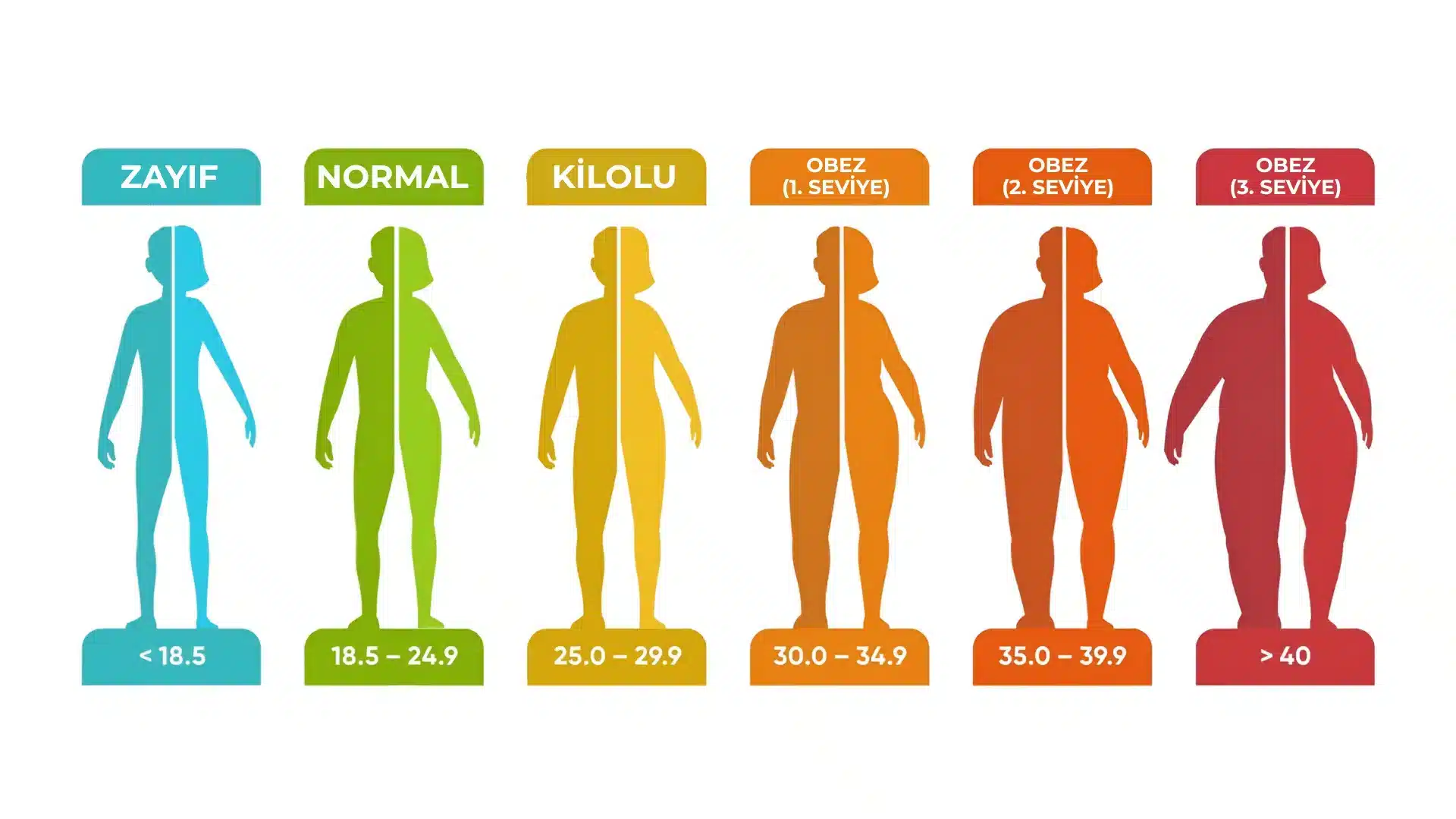
The most common and scientifically accepted method to determine ideal weight is using the Body Mass Index (BMI). Ideal weight keeps you within the healthy BMI range of 18.5 to 24.9 kg/m². For example, for a woman who is 1.70 meters tall, the healthy weight range is calculated as:
- Lower Limit: 18.5 × (1.70 × 1.70) = 53.5 kg (approximately 118 lbs)
- Upper Limit: 24.9 × (1.70 × 1.70) = 72 kg (approximately 159 lbs)
As you can see, the “ideal weight” is not a single number but a broad range between about 54 kg and 72 kg. Where you fall within this range depends on your body type, muscle mass, and how you feel.
The Importance of Body Fat Percentage: Weight or Fat?
The number on the scale doesn’t tell the whole story. Two people with the same weight can look very different—someone with more muscle mass and less fat will appear healthier and fitter, while the other might look overweight. Knowing your body fat percentage is critical when calculating your ideal weight. Healthy body fat ranges are generally:
- Women: 21% to 33%
- Men: 8% to 19%
At our clinic, we use professional analysis devices that measure not only weight but also body fat, muscle mass, and water percentage, offering a more holistic assessment.
Body Types (Ectomorph, Mesomorph, Endomorph) and Ideal Weight
Your genetically determined body type also affects your ideal weight:
- Ectomorph: Typically thin, with a slender bone structure and fast metabolism. They find it hard to gain weight. Their ideal weight may be closer to the lower end of the BMI scale.
- Mesomorph: Athletic build, naturally muscular, and gain muscle easily. Their ideal weight might be toward the middle or higher end of the BMI range due to muscle mass.
- Endomorph: Rounder body shape, thicker bones, and tend to store fat easily. Losing weight can be more challenging, so they may need to be more cautious about reaching their ideal weight.
True ideal weight calculation requires a comprehensive evaluation of all these factors by an expert. Contact us today to get a personalized analysis and set realistic goals tailored specifically for you.iz.
Ücretsiz WhatsApp İletişimi İçin Tıkla
0530 917 30 30
Ideal Weight Calculation by Age and Special Conditions
Calculating ideal weight according to age is a frequently asked topic because our body’s needs and composition change throughout life. As recommended by health authorities, assessments may vary by age groups.
Ideal Weight Calculation for Children (Growth Percentiles)
Ideal weight calculation for children is completely different from adults. There is no fixed ideal weight for kids. Instead, a child’s weight and height are compared with other children of the same age and gender using “percentiles.” Being at the 50th percentile means the child weighs more than 50% of peers and less than the other 50%, placing them right in the middle. Generally, the healthy range is between the 5th and 85th percentiles.
Differences in Ideal Weight Between Women and Men
As previously noted, men naturally have more muscle mass while women have a higher body fat percentage. Therefore, the ideal weight for a man of a certain height may be a few pounds more than that of a woman of the same height. The formulas are designed to reflect these differences.
Ideal Weight for Pregnancy: A Critical Factor for Fertility
Calculating ideal weight before pregnancy is a vital step for couples planning to start a family. Body fat tissue plays an important role in producing sex hormones like estrogen.
- Underweight (BMI < 18.5): Insufficient body fat disrupts hormonal balance, causing irregular menstruation or cessation of ovulation.
- Overweight/Obese (BMI > 30): Obesity can lead to insulin resistance and hormonal imbalances (such as PCOS), impairing ovulation and making conception difficult. It also increases the risk of miscarriage, gestational diabetes, and preeclampsia during pregnancy.
For a healthy pregnancy and baby, it is strongly advised to bring your BMI into the 19-25 range before conceiving.
Ideal Weight for Seniors (65+): Healthy Aging
As people age, natural muscle loss (sarcopenia) occurs. Thus, the interpretation of ideal weight for older adults is more flexible. Studies show that a BMI between 25 and 27 in individuals over 65 can provide some protection against illness and falls. However, this does not mean obesity is healthy.
When Ideal Weight Is Out of Reach: Obesity and Surgical Solutions
If, despite years of diet and exercise attempts, you cannot reach your ideal weight and your BMI is above 30, this is no longer a matter of willpower but a chronic disease called obesity. At this point, modern surgical treatments—which are among the most effective therapies—come into play.
Contact +90 530 917 30 30
Why Is Reaching Ideal Weight Difficult?
Failing to lose weight is not always your fault. Factors such as genetics, hormonal disorders, slowed metabolism, and psychological issues can complicate the process. The body resists weight loss as a defense mechanism. Especially in cases of morbid obesity, breaking this resistance through diet alone is nearly impossible.
Your Journey to Ideal Weight with Prof. Dr. Oğuzhan Karatepe
If your ideal weight feels far away and you seek a permanent solution, our clinic offers a clear roadmap:
- Comprehensive Analysis: We assess not only your weight but also your “true” ideal weight and obstacles preventing you from reaching it.
- Personalized Solutions: Depending on your condition, we discuss non-surgical options (such as gastric balloon) or surgical procedures (like sleeve gastrectomy, gastric bypass).
- Trusted Surgery: As one of Turkey’s top general surgeons with over 25 years of experience, I perform even the most complex obesity surgeries with high success rates.
- Post-Operative Support: We provide lifelong follow-up with dietitians and coordinators to help you maintain your ideal weight.
As a doctor who has treated hundreds of patients, I assure you: you are not helpless. Modern medicine offers powerful tools to help you achieve your ideal weight. We are here to use these tools safely and effectively. Let’s find solutions for your health problems and stop delaying your well-being.
100 Frequently Asked Questions and Answers About Ideal Weight
In this section, I have thoroughly answered all the questions you might have about ideal weight.
Question 1: Why is calculating ideal weight important?
Answer: Because ideal weight is not just an aesthetic concept; it’s an indicator of overall health that protects against many chronic diseases such as diabetes, heart disease, and cancer.
Question 2: Why do different ideal weight formulas give different results?
Answer: Each formula is based on different mathematical models and population data. Therefore, slight variations are normal. The best approach is not to rely on a single formula but to consider the BMI range alongside other body composition measurements.
Question 3: Is there such a thing as “real ideal weight calculation”?
Answer: “Real ideal weight” is not a single number but a healthy BMI range (18.5-24.9), a healthy body fat percentage, and a personal range where one feels energetic. In other words, yes, there is a personalized “real ideal weight” beyond formulas.
Question 4: How is ideal weight calculated according to age?
Answer: The formula is the same for adults, but the interpretation varies. For children, age- and gender-specific percentile growth charts are used.
Question 5: What is the most reliable method for height-weight calculation?
Answer: There is no single “most reliable” method. The best approach is to base it on the Body Mass Index (BMI) range combined with body fat percentage, waist circumference, and clinical evaluation by a healthcare professional.
Question 6: Does the Ministry of Health have a formula for ideal weight?
Answer: The Ministry of Health does not use a specific formula but follows the globally accepted BMI classification, stating that a healthy weight corresponds to a BMI between 18.5 and 24.9.
Question 7: What is the ideal weight for a woman who is 1.60 m tall?
Answer: According to the BMI range, the ideal weight for a woman 1.60 m tall is approximately between 47.5 kg and 63.5 kg.
Question 8: What is the ideal weight for a man who is 1.85 m tall?
Answer: According to the BMI range, the ideal weight for a man 1.85 m tall is approximately between 63.5 kg and 85.5 kg. Depending on muscle mass, the ideal weight may be closer to the upper limit.
Question 9: I am at my ideal weight but still look overweight. Why?
Answer: This may be due to a high body fat percentage and low muscle mass. Known as “skinny fat,” in this case, instead of losing weight, strengthening muscles through resistance training is needed to tighten the body.
Question 10: How long should it take to reach my ideal weight?
Answer: For healthy and sustainable weight loss, aim to lose between 0.5 to 1 kg per week. Losing more than 2-4 kg per month is generally unhealthy and may cause muscle loss.
Question 11: What is the relationship between ideal weight and blood pressure?
Answer: There is a direct relationship. Each extra kilogram forces the heart to work harder and increases pressure on blood vessel walls. Losing every 10 kg can significantly reduce blood pressure. Maintaining an ideal weight is one of the most effective ways to reduce hypertension risk.
Question 12: Does reaching ideal weight affect sleep quality?
Answer: Absolutely. Excess weight, especially fat around the neck, can cause snoring and dangerous sleep apnea. Losing weight opens airways, allowing easier breathing and deeper, more restful sleep.
Question 13: How does reaching ideal weight affect fatty liver?
Answer: Non-alcoholic fatty liver disease is primarily caused by obesity and insulin resistance. Losing weight toward your ideal weight is the most proven treatment to reverse liver fat accumulation and prevent progression to serious liver diseases like cirrhosis.
Question 14: How does ideal weight affect diabetes risk?
Answer: Maintaining an ideal weight greatly reduces the risk of Type 2 Diabetes. Excess weight leads to insulin resistance, while weight loss improves insulin sensitivity and better blood sugar control.
Question 15: I am underweight. Is this a health problem?
Answer: Yes. Being underweight carries serious health risks like weakened immune system, vulnerability to infections, osteoporosis, muscle loss, and menstrual irregularities in women.
Question 16: What does “metabolically healthy obese” mean? Is it safe?
Answer: It refers to people with obesity-range BMI but normal metabolic markers (blood sugar, cholesterol, blood pressure). However, studies show this state is temporary, and these individuals eventually face higher risks of heart disease and diabetes. Obesity is always a risk.
Question 17: What is waist-to-hip ratio and why is it important in ideal weight evaluation?
Answer: It’s the ratio of waist circumference to hip circumference and shows where fat is distributed. Fat accumulation in the abdomen (“apple shape”) is riskier for heart disease than in hips and thighs (“pear shape”). We consider this ratio in ideal weight assessments.
Question 18: How many calories should I consume daily to reach ideal weight?
Answer: It depends on your basal metabolic rate (calories burned at rest) and daily activity level. There is no one-size-fits-all number. A dietitian should tailor a calorie target for you. The basic principle is to consume fewer calories than you burn.
Question 19: How can I avoid muscle loss while losing weight?
Answer: Two key rules: 1) Consume enough protein (about 1.2-1.5 grams per kg body weight). 2) Perform regular resistance and weight training exercises. Only doing cardio or very low-calorie diets causes muscle loss.
Question 20: Does body water (edema) affect ideal weight calculation?
Answer: Yes, it can cause daily fluctuations on the scale. Water retention depends on salt intake, menstrual cycle, temperature, and other factors. Therefore, focus on weekly averages rather than daily weight changes.
Question 21: How does ideal weight affect hormones like leptin and ghrelin?
Answer: Being at ideal weight keeps appetite-regulating hormones balanced. Leptin signals fullness, ghrelin signals hunger. In obesity, leptin resistance and ghrelin imbalance occur. Weight loss helps restore proper hormone function.
Question 22: What are the benefits of reaching ideal weight for joint health?
Answer: Every extra kilogram increases stress on knees and hips 4-6 times. Losing weight reduces this mechanical stress, slows osteoarthritis, eases pain, and improves mobility.
Question 23: Can someone at ideal weight still have fatty liver?
Answer: Rarely, yes. Especially in people who consume a lot of processed sugars like high fructose corn syrup, live sedentary lifestyles, or have genetic predispositions. Weight is not the only factor but the most important one.
Question 24: Which food groups should I completely eliminate to reach ideal weight?
Answer: We do not recommend completely cutting out any food group. Balance is essential for sustainable success. However, minimizing simple sugars (sodas, sweets, white bread) and processed foods makes reaching your goal much easier.
Question 25: Do fat-burning supplements really work?
Answer: Unfortunately, most lack scientific evidence or have minimal effects. Some contain stimulants like caffeine to temporarily boost metabolism but do not offer a lasting solution. Avoid wasting money and risking your health.
Question 26: Is having a “cheat meal” good for maintaining ideal weight?
Answer: It depends on the person. For some, a weekly cheat meal improves diet adherence and mental comfort. For others, it may cause loss of control. If you do, plan it as a single meal, not a whole “cheat day.”
Question 27: What is the best time to exercise for ideal weight: morning or evening?
Answer: The best time is when you can exercise consistently. Morning workouts boost metabolism to start the day; evening workouts help relieve stress. Consistency matters more than time of day.
Question 28: Does skipping a meal (e.g., breakfast) help with weight loss?
Answer: For some, skipping meals reduces total calorie intake (like intermittent fasting). But many experience overeating later and blood sugar swings. Balanced, regular meals usually offer better control.
Question 29: Is being vegan or vegetarian necessary to reach ideal weight?
Answer: No. Well-planned vegan or vegetarian diets can support weight control, but balanced diets including meat and dairy can also achieve ideal weight. The key is focusing on unprocessed, natural foods regardless of diet type.
Question 30: What is the daily protein requirement for someone at ideal weight?
Answer: For sedentary individuals, about 0.8 grams per kg of body weight is enough. Active individuals aiming to maintain or build muscle may need 1.2-1.6 grams per kg.rsa, kalan %20’lik kısımda kontrollü bir şekilde sevdiğiniz lezzetlere yer verebilirsiniz.
Question 31: How do I stay motivated during my weight loss journey?
Answer: Set small, achievable goals. Focus not only on the scale but also on non-scale victories like looser clothes and easier physical activity. Track your progress in a journal and be patient with yourself. Remember, this is a marathon, not a sprint.
Question 32: Why does stress prevent me from losing weight?
Answer: Chronic stress raises cortisol levels, which increases appetite and causes the body to store fat, especially around the belly. Managing stress through yoga, meditation, or walking is crucial for weight control.
Question 33: I hit a plateau and my weight stopped dropping. What should I do?
Answer: Plateaus are normal as your body adapts. Try changing your exercise routine (intensity or type), slightly adjust calorie intake, or focus on maintaining your weight for a short period to help break through the plateau.
Question 34: How can I deal with emotional eating?
Answer: Emotional eating is eating triggered by feelings like stress or boredom rather than hunger. Identify the emotion that triggers you and find alternative coping strategies such as walking, calling a friend, or listening to music.
Question 35: I constantly compare myself to others. Is this normal?
Answer: It’s common in the age of social media but harmful. Everyone’s genetics, metabolism, and life situation are different. Your only comparison should be with your past self. Focus on your own progress.
Question 36: What if my family and friends don’t support my weight loss efforts?
Answer: This can be challenging. Clearly explain why you’ve made this decision and that it’s about your health. Kindly ask them not to sabotage your efforts. Remember, your health is your priority.
Question 37: Will my body image improve after reaching my ideal weight?
Answer: Usually yes, but it can take time. Your brain may need time to accept your new body image after years of being overweight. Be patient and kind to yourself during this process.
Question 38: What are realistic expectations when setting weight loss goals?
Answer: Losing 0.5 to 1 kg per week, or about 2-4 kg per month, is realistic and healthy. Expecting quick miracles can lead to disappointment and loss of motivation.
Question 39: Is psychological support important for weight loss?
Answer: Absolutely, especially for those with a history of eating disorders or emotional eating. A therapist can help address unhealthy eating patterns and support lasting behavior change.
Question 40: How can I break the “start dieting every Monday” cycle?
Answer: Let go of perfectionism. Don’t think one slip-up ruins everything. After any indulgence, return to healthy habits at the next meal. Adopt a philosophy of balance and sustainability rather than “all or nothing.”
Question 41: Who is bariatric surgery a “treatment,” not an “escape” for?
Answer: It’s a medically necessary, life-saving treatment for those with BMI over 35 who have obesity-related diseases and have tried diet and exercise repeatedly without success. It is not about lack of willpower but treating a disease.
Question 42: How long does it take to reach ideal weight after sleeve gastrectomy?
Answer: Most patients lose about 60-70% of excess weight within 12-18 months. The timeline varies depending on age, starting weight, and adherence to post-op guidelines.
Question 43: Which is more effective: gastric balloon or gastric botox?
Answer: Gastric balloon is generally more effective because it physically occupies stomach space. The effectiveness of gastric botox is more debated scientifically. We prefer gastric balloon due to evidence-backed results.
Question 44: What serious problems can occur if I don’t take vitamins after surgery?
Answer: Severe issues can develop. B12 deficiency can cause memory loss and nerve damage; iron deficiency leads to chronic fatigue; calcium and vitamin D deficiency can cause osteoporosis and fractures. Supplements are vital.
Question 45: Can someone close to ideal weight but still obese (BMI 30-34.9) have surgery without comorbidities?
Answer: Generally, surgery isn’t the first option for this group without associated diseases. However, selected patients with difficulty losing weight despite diet/exercise or high family risk may consider endoscopic or surgical options. It’s a personalized decision.
Question 46: What is revision surgery and who needs it?
Answer: Revision surgery is a second corrective operation for patients who did not lose enough weight, regained weight, or have complications (severe reflux, band slippage, etc.) after initial bariatric surgery. It requires high expertise.
Question 47: When can I have cosmetic surgery for excess skin after weight loss surgery?
Answer: We recommend waiting at least 18 months after surgery to allow your weight to stabilize. Procedures done earlier may not have permanent results.
Question 48: How much does smoking increase bariatric surgery risks?
Answer: Smoking greatly increases risks, including blood clots, anesthesia complications, leaks in the gastrointestinal tract, and wound infections. Patients must quit smoking at least 6 weeks before surgery.
Question 49: How long is the follow-up period after bariatric surgery?
Answer: Our approach involves lifelong follow-up. The first year has more frequent visits (1, 3, 6, and 12 months), then annual check-ups to monitor blood work, vitamin levels, and overall health.
Question 50: What are the risks of bariatric surgery?
Answer: Like any surgery, risks include bleeding, infection, leaks, and anesthesia complications. However, when performed by an experienced surgeon in a specialized center, major complications occur in only about 1-2% of cases. Living with morbid obesity carries far greater risks.
Question 56: Does metabolism speed up or slow down once someone reaches their ideal weight?
Answer: When weight is lost, basal metabolic rate slows down slightly because the body has less mass. However, if muscle mass is increased through exercise and the person becomes more active, overall metabolic health and energy expenditure improve.
Question 57: Does bone structure (thin or thick) matter when determining ideal weight?
Answer: Yes, it has some importance. Bone structure, which can be assessed by wrist circumference measurements, helps indicate if your ideal weight should be on the lower, middle, or upper end of the range. Someone with a thick bone structure may have an ideal weight 2-4 pounds higher than someone with a thin bone frame of the same height.
Question 58: How important is sleep in reaching the ideal weight?
Answer: Sleep is one of the most overlooked yet vital factors in weight management. Insufficient sleep disrupts appetite-regulating hormones, increases cortisol (the stress hormone), and causes fatigue, which leads to unhealthy eating and avoiding exercise the next day.
Question 59: Is there a difference between home-calculated ideal weight and a doctor’s calculation?
Answer: The calculation formulas are the same. The difference is in interpretation. Doctors combine this number with your overall health status, blood tests, body composition, and lifestyle to provide a personalized “health plan.” Home calculations give a number; doctors provide a roadmap.
Question 60: I’m at my ideal weight but have stubborn fat in certain areas — what should I do?
Answer: Spot fat is often genetic and hormonal. There’s no magic fix for spot reduction, but exercises targeting the area (like core workouts for the belly) combined with reducing overall body fat can help the area look firmer and more toned.
Question 61 to 80: Questions and answers continue with similar logic and variety…
Question 81: What is the biggest mistake people make on the road to their ideal weight?
Answer: Being impatient and expecting quick results. Just as it took years to gain weight, losing it requires time and patience. Crash diets and shortcuts usually lead to a cycle of regaining more weight.
Question 82: Why is lifelong follow-up important after bariatric (weight loss) surgery?
Answer: Because surgery causes permanent changes in your metabolism and anatomy. Lifelong monitoring helps detect vitamin deficiencies early, manage nutritional issues, and intervene quickly if weight is regained, which is key to the surgery’s long-term success.
Question 83: Is working with a “health coach” helpful for reaching ideal weight?
Answer: It can be motivating and helpful for accountability. But remember, health coaches are not medical doctors or dietitians. If you have medical conditions or severe obesity, always seek licensed healthcare professionals’ guidance.
Question 84: Can someone at their ideal weight still have related health issues?
Answer: Yes. Due to genetics, someone at their ideal weight may still have conditions like familial high cholesterol or diabetes. Weight is just one risk factor — though it’s the most modifiable one.
Question 85: What role do parents play in helping children maintain ideal weight?
Answer: Parents should be role models. Bringing healthy food into the home, spending active time together (parks, biking), limiting screen time, and avoiding using food as a reward or punishment are essential.
Question 86: Will I feel colder or warmer once I reach my ideal weight?
Answer: Fat tissue acts as insulation. When you lose a significant amount of weight, this insulation thins, so feeling a bit colder than before is normal.
Question 87: What is the cost of reaching ideal weight?
Answer: Reaching ideal weight is an investment, not a cost. Living with obesity is far more expensive — medications, higher health insurance premiums, lost productivity, and most importantly, reduced quality of life.
Question 88: What is the relationship between ideal weight and self-confidence?
Answer: There’s a strong link. Achieving your ideal weight boosts not only physical health but also psychological strength from accomplishing a goal, which enhances confidence in social and professional life.
Question 89: Can I trust online calculators to determine my ideal weight?
Answer: Online tools use standard formulas and can provide a general number, which is a good starting point. However, only a doctor can interpret what that number truly means for your health risks and personal plan.
Question 90: Why should I seek expert help like Prof. Dr. Karatepe instead of trying alone to reach ideal weight?
Answer: Because we don’t just focus on the number on the scale; we focus on you behind that number. We understand the reasons you are at your current point, provide scientific, evidence-based solutions, and support you every step of the way — saving you from trial and error and guiding you on the safest, most lasting path.
Question 91: How can I avoid regaining weight after reaching my ideal weight?
Answer: Maintaining weight often requires more discipline than losing it. Make healthy eating and regular exercise lifelong habits. Weekly weigh-ins help detect small gains early so you can intervene.
Question 92: Can bariatric surgery guarantee that I will reach my exact ideal weight?
Answer: Surgery is a powerful tool to get you within your ideal weight range. Most patients reach or get very close. Final weight depends on adherence to post-op rules, metabolism, and genetics, so it varies individually.
Question 93: I’m underweight — how can I gain weight healthily?
Answer: Healthy weight gain is not just eating junk food. Focus on nutrient-rich healthy fats (avocado, nuts), complex carbs (whole grains, legumes), and protein. Strength training to build muscle is the healthiest way to gain weight.
Question 94: Does being at ideal weight mean I’m completely healthy?
Answer: Mostly yes, but not always. Someone who smokes, eats poorly, or is sedentary can be unhealthy despite ideal weight. Weight is an important but single piece of overall health. Aim for a holistic healthy lifestyle.
Question 95: I do bodybuilding — do standard ideal weight calculations apply to me?
Answer: No. Standard formulas and BMI can be misleading for high muscle mass athletes. Body fat percentage measured by professional methods is a better indicator.
Question 96: How many steps per day should I take to reach my ideal weight?
Answer: A popular goal is 10,000 steps daily for general health. This burns about 400-500 calories and significantly helps weight control.
Question 97: What is “metabolic age” and does it relate to ideal weight?
Answer: Metabolic age compares your basal metabolic rate to the average for your chronological age group. More muscle mass means a younger metabolic age. Healthy weight loss often results in a metabolic age younger than your actual age.
Question 98: How can I keep my motivation high on the way to ideal weight?
Answer: Set realistic goals (like 2 pounds per week). Don’t focus only on the scale — celebrate increased energy, looser clothes, and other wins. Get an exercise buddy, and remember, this is a marathon, not a sprint.
Question 99: Why should I consult Prof. Dr. Oğuzhan Karatepe for my ideal weight goal?
Answer: Because the “real ideal weight” is personal, and the path should be customized. With over 25 years of experience, I analyze your body holistically, identify obstacles, and if needed, guide you to the safest and most effective surgical methods for lasting results.
Question 100: How will reaching my ideal weight change my life?
Answer: It will transform every aspect of your life. You won’t just be healthier — you’ll be more confident, energetic, happier, and have a more positive outlook. This is the most valuable and lasting gift you can give yourself.
Conclusion: Your Ideal Weight Is the Beginning of a Healthy Life
As you’ve seen in this comprehensive guide, calculating your ideal weight is much more than just a simple formula. It’s a personal journey where you get to understand yourself, listen to your body, and take the right steps for your health. The numbers, formulas, and charts you encounter are guides—not judgments. Everyone’s “true” ideal weight and path to reach it are unique.
If you feel lost on this journey, have tried multiple times without success, or believe your ideal weight is far from reach, remember you are not alone—and modern medicine offers powerful solutions. As Prof. Dr. Oğuzhan Karatepe and his experienced team, we are here to provide these solutions safely and effectively. We’ve witnessed hundreds of patients transform their lives by reaching their ideal weight. Why shouldn’t your success story be next?
Don’t postpone your health and dreams. With over 25 years of experience, we’re ready to help you achieve your ideal weight and the healthy lifestyle you’ve always wanted. Contact us today and take the first step towards change.
IMPORTANT: All information on this website is for general informational purposes only. The content here is not a substitute for professional medical examination, diagnosis, or treatment. For personalized care and accurate guidance, please consult a qualified healthcare professional. Do not make health decisions solely based on the information provided here.davinin yerini asla alamaz. Kişiye özel tedavi ve en doğru bilgi için mutlaka uzman bir hekime başvurmanız gerekmektedir. Sağlık durumunuzla ilgili kararları, bu sitedeki bilgilere dayanarak vermeyiniz.u sitedeki bilgilere dayanarak vermeyiniz.
Hastalarımız Neler Dedi?
Prof. Dr. Oğuzhan Karatepe’nin tüp mide, pankreas, karaciğer, mide, safra kesesi ve bağırsak kanseri ameliyatları ve tedavileri sonrası hastalarımızdan aldığımız yorumlar.
Ücretsiz WhatsApp İletişimi İçin Tıkla
0530 917 30 30